For many small businesses in Saudi Arabia, Salla is the first step into eCommerce. It is simple, localized, and easy to launch. But once a business grows beyond basic online selling, many owners quickly discover a major limitation:
Salla is not a full financial operations platform.
That becomes a serious issue when businesses must comply with Phase 2 of Saudi Arabia’s ZATCA e-invoicing regulations — especially for companies dealing with wholesale orders, multi-branch operations, accounting workflows, ERP integration, or large invoice volumes.
The result? Businesses begin searching for a “Salla alternative” that can handle not just online sales, but full ZATCA-compliant invoicing, accounting, reporting, and operational control.
The Saudi market has matured rapidly since the rollout of the FATOORAH system. In 2026, businesses are no longer asking:
“Can this software generate invoices?”
They are asking:
- Can it pass ZATCA clearance reliably?
- Can it reduce rejected XML submissions?
- Can it automate VAT reporting?
- Can it integrate with ERP and POS systems?
- Can accounting teams actually use it without constant IT support?
That changes everything.
Why Businesses Outgrow Salla for ZATCA Compliance
Salla is excellent for launching an online store quickly. But businesses operating at scale often hit operational bottlenecks.
Typical problems include:
- Limited ERP integration
- Weak accounting depth
- Manual reconciliation
- Difficulty handling B2B invoicing
- Limited customization for enterprise workflows
- Dependence on third-party plugins for compliance tasks
This becomes especially painful during ZATCA Phase 2 integration, where invoice clearance, cryptographic stamps, UUID tracking, XML validation, and real-time API communication are mandatory.
According to multiple Saudi e-invoicing providers, businesses moving from lightweight commerce platforms to dedicated ZATCA systems report major improvements in invoice validation accuracy and operational efficiency.
The Real Cost of “Cheap” E-Invoicing
Many businesses choose low-cost tools initially because they appear cheaper upfront.
But hidden costs emerge later:
| Metric | Basic Store-Based Tools | Dedicated ZATCA Platforms |
|---|---|---|
| First-time Phase 2 integration success | Low–Medium | High |
| XML schema validation errors | Frequent | Rare |
| Manual accounting work | High | Automated |
| ERP/POS integration flexibility | Limited | Extensive |
| Scalability for multi-branch operations | Weak | Strong |
| VAT reporting automation | Partial | Advanced |
| Audit readiness | Moderate | Enterprise-ready |
The biggest hidden expense is not software pricing.
It is operational inefficiency.
A rejected invoice during peak transaction periods can delay accounting, disrupt logistics, and create compliance risk. Businesses handling thousands of invoices monthly cannot afford that.
One Saudi Reddit discussion described ZATCA integration as “a maze of specs, testing, and compliance headaches,” especially for businesses trying to retrofit lightweight systems into enterprise workflows.
Best Salla Alternatives for ZATCA E-Invoicing
1. FatooraOnline — Best for Operational Automation
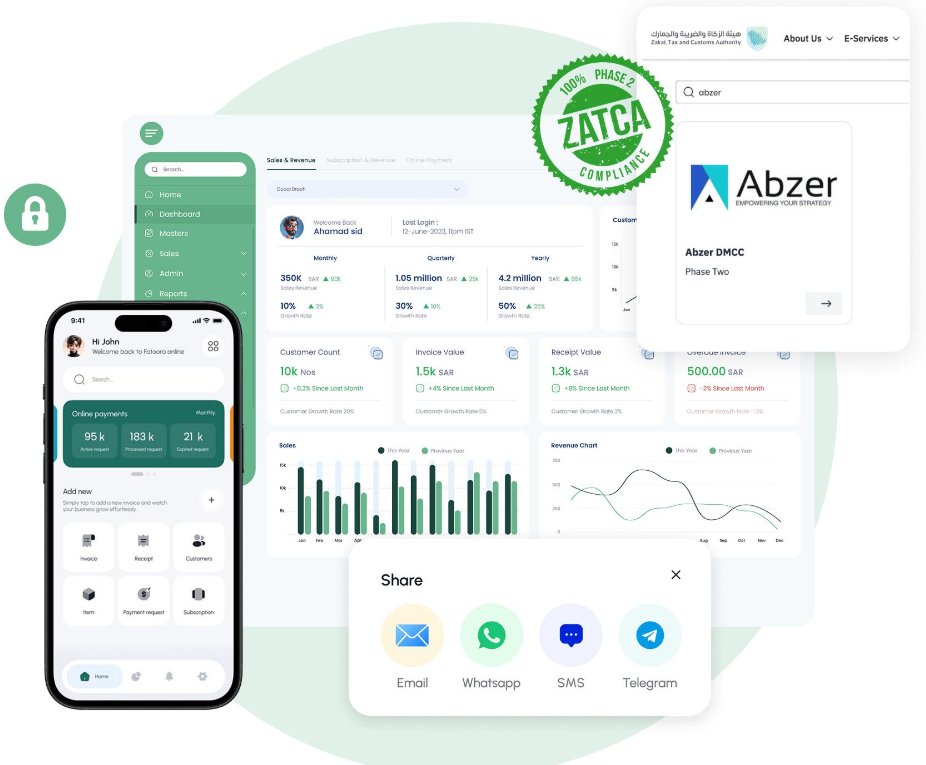
FatooraOnline positions itself beyond invoicing software. It focuses on revenue automation and operational workflows.
Key strengths include:
- Real-time ZATCA API clearance
- POS support
- Automated invoice archival
- Arabic + English invoice generation
- Embedded XML support
- Multi-currency invoicing
- Payment collection tracking
The biggest advantage is workflow consolidation. Instead of stitching together separate systems for invoicing, collections, and reporting, businesses manage everything in one environment.
Real-World Use Case
A medium-sized restaurant chain in Riyadh reportedly migrated from a lightweight eCommerce stack to a centralized ZATCA platform after struggling with invoice synchronization between branches.
After migration:
- invoice clearance became automated,
- accounting reconciliation time dropped significantly,
- and branch-level VAT reporting became centralized.
This is the kind of operational improvement many growing Saudi businesses are seeking.
2. Dynsof (Qafzo) — Best All-in-One Business Platform
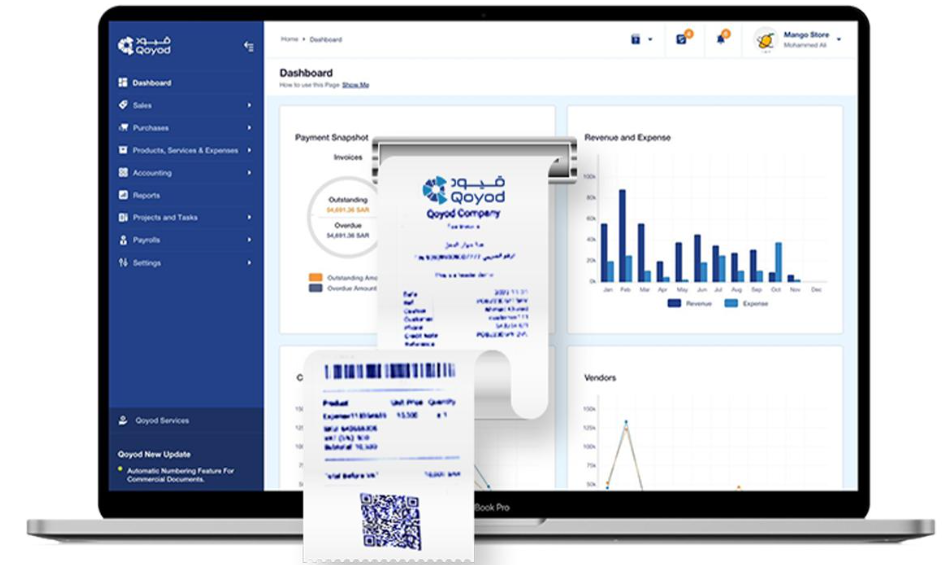
Dynsof focuses heavily on being an “all-in-one” platform rather than just an invoicing tool.
Its positioning is attractive for SMEs wanting:
- quotations,
- delivery notes,
- VAT reports,
- multi-company management,
- user permissions,
- integrated accounting,
- and ZATCA compliance together.
The platform claims:
- 99.9% uptime,
- millions of cleared invoices,
- and fast clearance speeds.
For businesses scaling from simple online selling into full operations management, this matters more than storefront design.
3. Haseem — Best for Simplicity
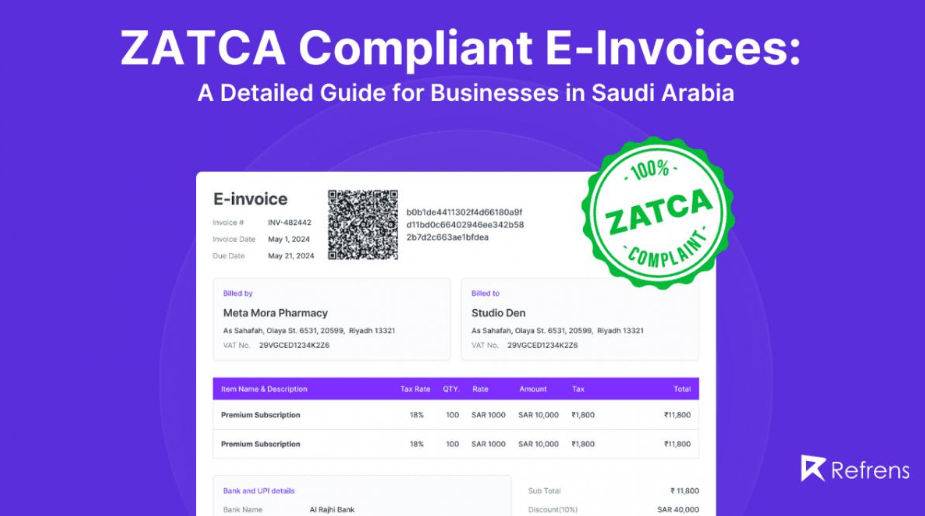
Not every business needs enterprise ERP complexity.
Some companies simply want:
- compliant invoicing,
- expense tracking,
- reconciliations,
- and easy bookkeeping.
That is where Haseem stands out.
Its value proposition is simplicity without sacrificing compliance. Businesses can issue Phase 1 and Phase 2 compliant invoices quickly without deep technical onboarding.
This makes it attractive for:
- freelancers,
- small agencies,
- clinics,
- local retailers,
- and early-stage SMEs.
4. Invotap — Best for Regional Expansion
Businesses operating across GCC markets need more than Saudi-only compliance.
Invotap supports:
- Saudi Arabia ZATCA,
- UAE MoF,
- and Egypt ETA compliance in one platform.
That becomes valuable for:
- regional distributors,
- franchise operators,
- multi-country retail groups,
- and cross-border B2B companies.
Instead of maintaining separate invoicing infrastructures for each country, companies centralize compliance workflows.
What Saudi Businesses Should Prioritize in 2026
The market has evolved.
The smartest businesses are no longer choosing software based only on monthly price.
They prioritize:
1. Compliance Stability
A system that works consistently during ZATCA updates matters more than flashy UI.
2. ERP Integration
Disconnected systems create accounting chaos.
Modern businesses need seamless integration between:
- POS,
- inventory,
- accounting,
- logistics,
- and invoicing.
3. Automation
Manual invoice correction destroys scalability.
Automation reduces:
- accounting labor,
- VAT errors,
- delayed submissions,
- and operational friction.
4. Local Support
Saudi businesses increasingly prefer vendors with:
- Arabic support,
- local hosting,
- local onboarding teams,
- and familiarity with Saudi compliance workflows.
Several providers now emphasize Saudi-hosted infrastructure and local support teams as competitive advantages.
The Biggest Mistake Businesses Make
Many businesses treat ZATCA compliance as a “checkbox.”
That is the wrong mindset.
The companies gaining competitive advantage in Saudi Arabia are using e-invoicing modernization to improve:
- operational visibility,
- cash flow tracking,
- financial automation,
- branch performance monitoring,
- and ERP integration.
In other words:
The winning businesses are turning compliance into operational efficiency.
The losing businesses are merely trying to “avoid penalties.”
Final Verdict: Which Salla Alternative Is Best?
There is no universal winner.
The right choice depends on business maturity.
| Business Type | Recommended Direction |
|---|---|
| Small local shop | Haseem |
| Growing SME | Dynsof |
| Multi-branch retail | FatooraOnline |
| GCC regional business | Invotap |
| Enterprise ERP integration | Fynamics / specialized providers |
If your business only needs basic online selling, Salla may still be enough.
But if you are serious about:
- scaling operations,
- reducing accounting overhead,
- automating VAT workflows,
- and building long-term compliance stability,
then upgrading to a dedicated ZATCA e-invoicing platform is no longer optional.
It is infrastructure.
And in Saudi Arabia’s rapidly digitizing economy, infrastructure determines who scales — and who gets left behind.